


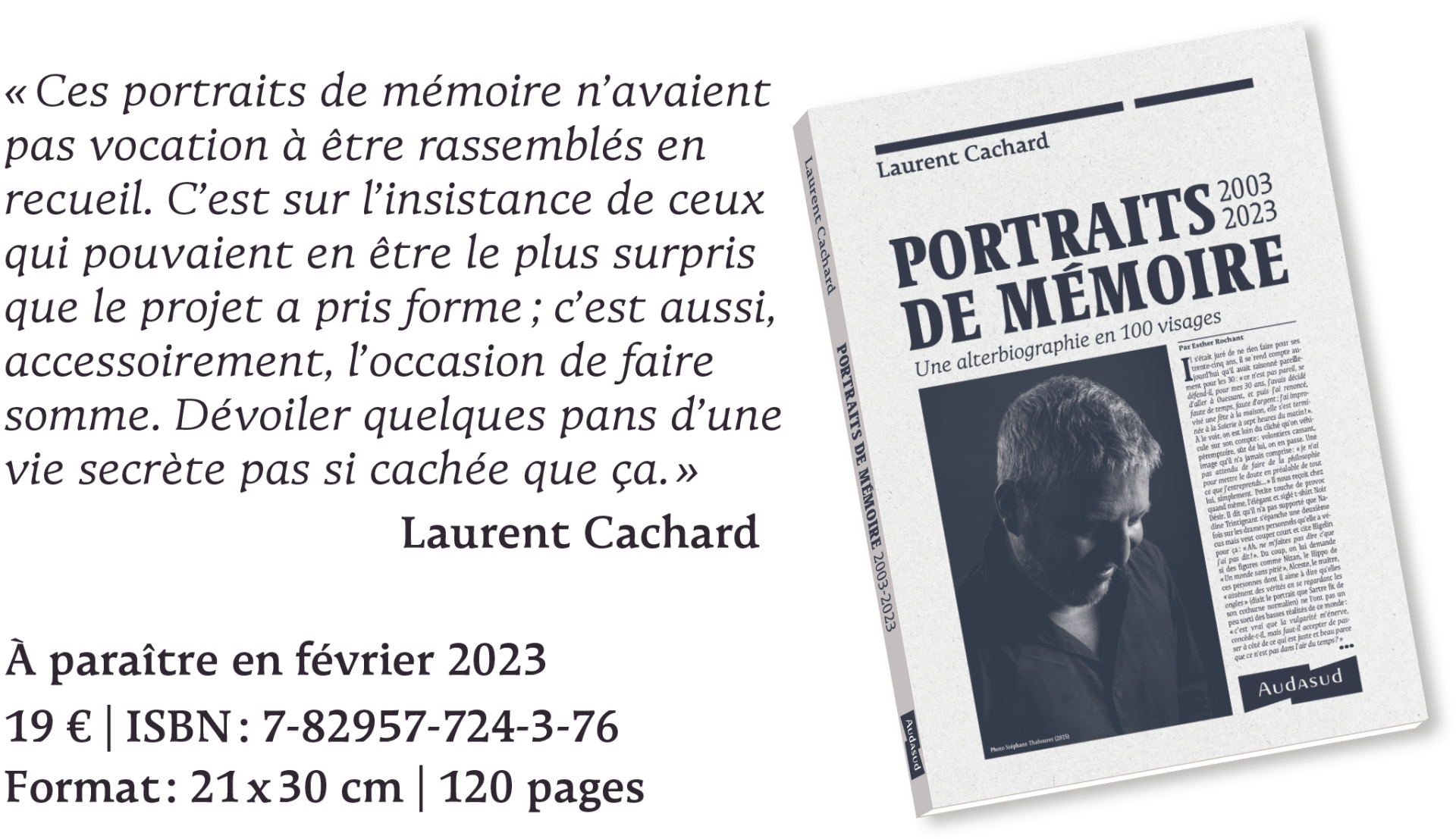
In Laurent Cachard, there is both the warm blood
of a Canut and the cold blood of a chameleon.
A
canuleon, a suitcase word for someone who delights in the written word, adapting to his surroundings and blending in without ever apologising for his own singularity. A trait that will be easy to read between the lines of the portraits he paints of his family and the people he meets: you don’t have to write about yourself to speak about yourself.
One hundred portraits make up this (large) extended family album, forming a human comedy of the past twenty years. Laurent Cachard skilfully explores over one hundred pages — plus a supplement on the art of revisiting — the nostalgia of shared reading and memories. He cheerfully, and never needlessly, practises
name dropping, sprinkling names as he does jargon (musical, literary, Sète…), bringing each in at just the right moment. His tendency to
paint portraits
will make you wary of crossing his path. Don’t take offence: this showman uncle is all hospitality, leaving unlikely musical instruments lying around his home to better keep visiting troubadours there.
And while he brilliantly manages to bring a languid giraffe alongside Alceste, the old misanthrope, and Célimène, the author also cultivates
elitist quips: “Suggesting that, to combat bad smells, we replace the septic tank with a proper Leibnizian makes the philosopher smile, but not the pool contractor.” Then, further on, with a deft turn, he apologises for it — or perhaps not.
Jean-Renaud Cuaz


Fast, tailored delivery

Secure one-time payment

Eco-friendly Organic Textiles

High-quality, long-lasting prints